
To help us provide you with free impartial advice, we may earn a commission if you buy through links on our site. Learn more
- Great sound quality
- Top quality build and looks
- Superb noise cancellation
- Heavy, loose fit
- Mesh canopy gets baggy over time
- Mediocre battery life
I waited a long time for AirPods Max 2 to arrive, and when they were announced earlier this year, I was disappointed. I was quite happy with the sound quality and the noise cancellation the original headphones offered, but I was looking for Apple to address the headphones’ most pressing shortcomings: fit, overall comfort and the case.
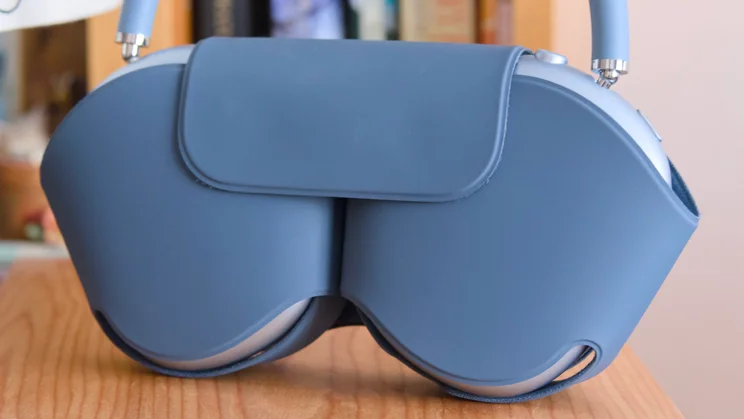
In the end, Apple made the most conservative decision it was possible to make with this upgrade. It left every tangible, physical element of the AirPods Max 2 exactly as it was before, down to the springy material suspended between the two arms of the rubber-clad headband, and the half-baked smart case.
And it upgraded only the internals, replacing the H1 chip with the H2, which Apple says improves both audio quality and active noise cancelling. Not the greatest of starts, but I was open to having my mind changed.

What do you get for the money?
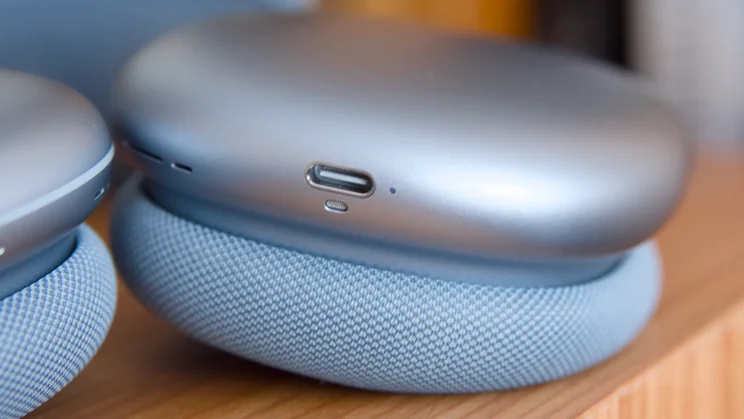
The good news is that the price hasn’t risen. In fact, the Max 2 is actually cheaper than the originals were at launch, as Apple replaced the Lightning port with USB-C and dropped the price by £50 to £499 in 2024.
Counting inflation, that’s quite a significant price drop in real terms.
The trouble is, the AirPods Max 2 are still more expensive than most of their immediate rivals, by £100 to £150. The Sony WH-1000XM6 are our current overall favourites, and you can pick up a pair for £349. Also excellent, but slightly pricier, are the Bose QuietComfort Ultra Gen 2 at around £400, as are the surprisingly good Sonos Ace. Bowers & Wilkins’ Px8 S2 are the only headphones we’ve reviewed recently that are more expensive than the AirPods Max 2, and come in at £629.
Is that premium worth paying? In terms of engineering and design, you could say yes. Apple has changed nothing about the design of the AirPods Max; there’s still nothing these other models can do to match the materials and the luxury feel of Apple’s headphones.
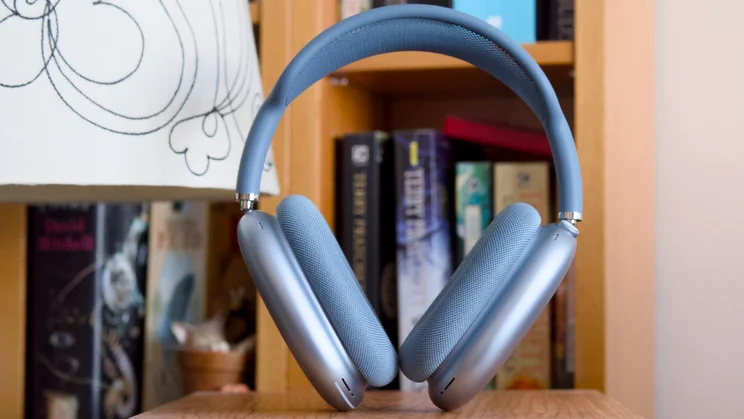
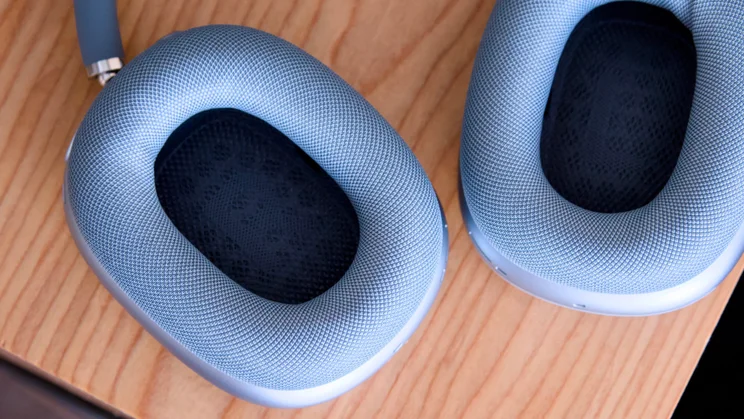
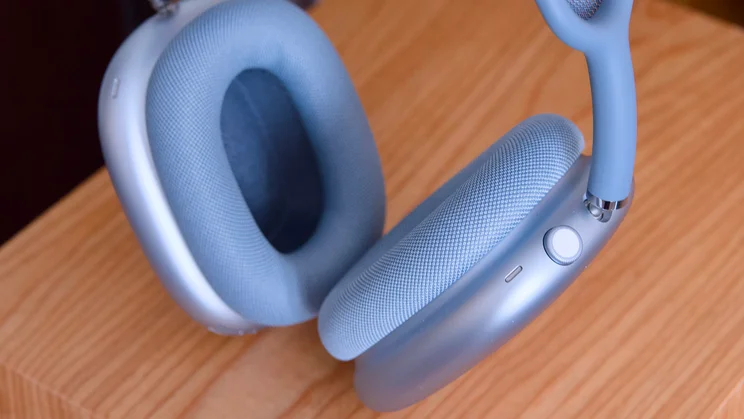
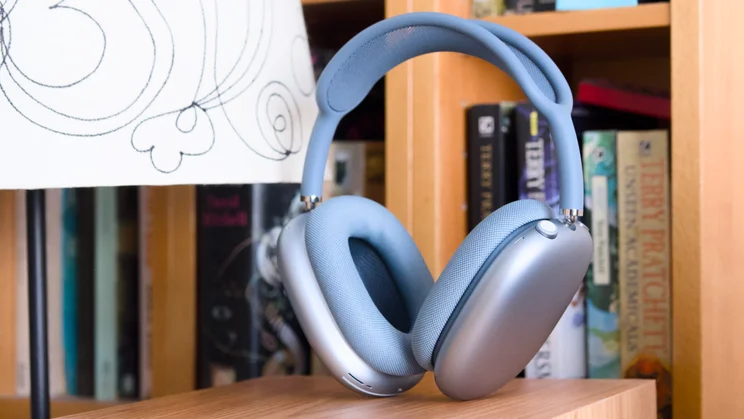
The smooth, colourful anodised aluminium earcups look great, and feel wonderful to hold. The stainless steel headband and thin springy mesh are exotically different, and the tactility of the button and clickable rotating digital crown on top of the right side earcup makes controlling the volume, skipping tracks, invoking Siri and switching between noise cancellation modes an absolute joy.
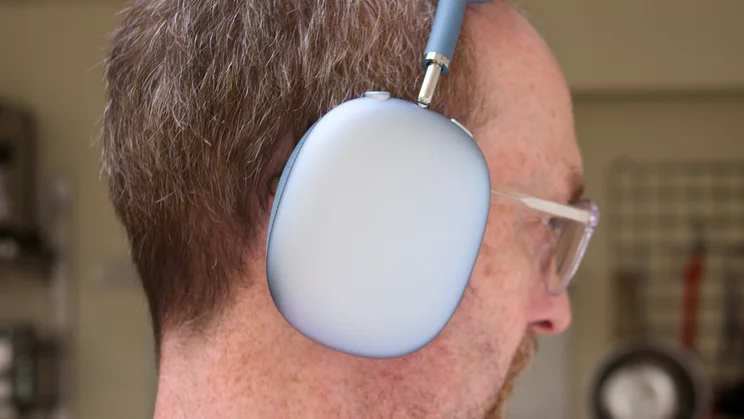
I would love Apple to have addressed the weight of the AirPods Max 2 – they’re still far too heavy in my opinion – and although general comfort levels are great, the fit isn’t perfect for those with narrower heads. But there is no doubting that the AirPods Max make a statement, particularly in the more colourful of the colourways. Along with the blue headphones pictured here, you can also pick them up in starlight, midnight, blue, purple and orange.
As noted above, the only significant difference is that Apple has introduced the H2 chip this generation, replacing the ageing H1. The result, Apple says, is improved sound quality and noise cancellation – the latter by “1.5x” – and the H2 chip brings in support for 5.5. However, the Max 2 still only support AAC and SBC wireless codecs; the only way to listen to the lossless audio provided by Apple Music is to connect the headphones to your phone or laptop via a USB-C cable and even then, you’re limited to 24-bit/48kHz. That’s a bit strange considering Apple Music Hi-Res Lossless goes all the way up to 24-bit/192kHz.
What do they do well?
Sound quality
Whether you connect them wirelessly or via USB, there’s no denying the AirPods Max 2 sound utterly brilliant. As soon as you put them on and start listening, you’ll be enveloped in sound so enjoyable that you won’t want to take them off again for quite some time.
The strength of the AirPods lies in the depth and breadth of the audio they produce. There’s a real separation between bass and other parts, lending music a sense of scale and depth that you don’t often hear in closed-back, over-ear headphones.
Immersive, full-spectrum electronic music is where these headphones are in their element. Max Cooper’s Perpetual Motion submerges you in layers and textures of sound, but I also really enjoyed the way they presented other genres. Julian Lage’s Hymnal was reproduced with such delicacy, finesse and intimacy that I felt almost as if I was in the room with him.
Where the AirPods Max 2 fall short is in ultimate control and muscle. While they are capable of producing prodigious amounts of bass, that bass is a little too laid-back and smooth. I fired up Angine de Poitrine’s Sherpa and compared them back-to-back with the Bowers & Wilkins Px8 S2 and found the rapid-attack virtuoso guitars lacked the clean, aggressive edge on the AirPods that they have on the Bowers headphones. It’s the same, albeit to a slightly lesser degree, when comparing them with the Sony WH-1000XM6.
Although I do prefer the way the AirPods Max introduce space and breathing space into mixes, they’re simply not as pin-sharp accurate or as forceful in their delivery as the best headphones on the market. They are marginally better than their predecessors – there’s perhaps a tiny bit more control and accuracy to the overall sound than on the AirPods Max – but the H2 chip hasn’t introduced a step change here.
But you may not care once you begin to wrap your ears around Apple’s library of Atmos audio content. With Personal Spatial Audio, which adds a whole new level to your music, you get more depth, more breadth, more breathing space.
My go-to track for testing Atmos mixes on Apple Music is Justin Gray’s Tapestry. It’s a multi-layered production mastered for the standard and comes across brilliantly in the AirPods Max 2. I’ve listened to this track in an Atmos studio, so I know what it should sound like, and the AirPods reproduce it with superb fidelity. Every instrument and sound effect is clearly distinguishable from the next and easy to pick out in virtual space. If this is the type of thing you love listening to, no pair of headphones does spatial audio better.
Noise cancellation, transparency and microphone
Surprisingly, though, the area where I think the AirPods Max 2 really excel is active noise cancelling. Swapping between these and our favourites on this front – the Sony WH-1000XM6 – left me struggling to tell the difference. If anything, in a lively, buzzy office, it was the Apple headphones that marginally deadened more of the surrounding hubbub.
While the WH-1000XM6 were slightly better at killing off higher frequencies – the tapping and clattering of office drones hammering at keyboards – the AirPods Max 2 had the edge on inconsequential water-cooler blather.
The ultimate test for noise-cancelling headphones of any stripe, though, is the London Underground. The screech and clatter the carriages make as they crash along the track between Old Street and Liverpool Street stations can reach an eardrum-damaging 90dB+.
At the risk of arched eyebrows and disapproving sighs, I switched back and forth between the two headphones on a Central Line train between Mile End and Liverpool St to try to separate the two. The result? Sony’s WH-1000XM6 retain the crown, but – in the words of the great Ian Smith – by the barest of margins.
Call quality
As far as call quality goes, I was impressed with the microphone quality overall, but not the native background noise rejection. The AirPods Max 2, like the first generation, have no option for that in the settings, which means the call quality will be entirely down to the noise-cancellation capabilities of your calling platform.
So, for regular phone calls in noisy environments, the AirPods Max 2 won’t be great because they’re recording everything – and I mean everything. But for video calls, they’re probably okay as the third-party software will do much of the heavy lifting. Zoom’s noise cancellation is particularly good, but Google Meet, Microsoft Teams, Apple FaceTime and WhatsApp all do voice cancellation, too. Certainly, on the calls I’ve used them on, no one has complained about audio quality.
Transparency and other features
There’s plenty else to like about the AirPods Max 2, though, aside from the core capabilities of sound quality, noise cancellation and call quality. The transparency mode remains excellent. It passes external sounds to your ears naturally, so you don’t really need to take the headphones off to listen to announcements or have a conversation.
And although there’s nothing to compare with Sony’s situational awareness modes, you can now set the AirPods Max to adjust the volume automatically, based on how loud your surroundings are.
Also new to the AirPods Max (the AirPods Pro have had this for a couple of generations) is the ability to shake and nod your head to accept and reject calls. This is a genuinely useful feature, and I’ve always loved the way the headphones respond with a soft “donk, donk, donk” each head movement is detected.
And there’s also the option to mute the headphones when you talk; this works effectively, but it’s not great if you tend to mutter under your breath (guilty m’lud), as you’ll find your music/podcast/audiobook constantly muting when you don’t want it to.
What could they do better?
It really was disappointing to find that the AirPods Max 2 are still loose and heavy enough that they slowly inch down my face if I bend over to tie my shoelaces, fly off entirely – taking my glasses with them – if I sneeze particularly violently. This is something that Apple could and should have changed. A bit more tension on the headband or some subtle change of geometry, even a small headband size, might have helped to mitigate this issue.
I’m not hugely happy that the springy mesh headband “canopy” has been retained, either. Although this is effective at relieving pressure on the top of your head when you first get the headphones out of the box, the mesh tends to lose elasticity over time and go baggy – and you’ll then find the two steel beams on either side resting uncomfortably on the top of your head forevermore.
There are aftermarket products you can buy that clip on and restore the comfort levels to a box-fresh state, and you can replace the entire headband if you really want – a SIM card ejection tool will do the trick – but this is another area where I think Apple should have revamped the design. There’s a reason that no other manufacturers have gone down this route, and it’s not because Apple’s engineers are geniuses.
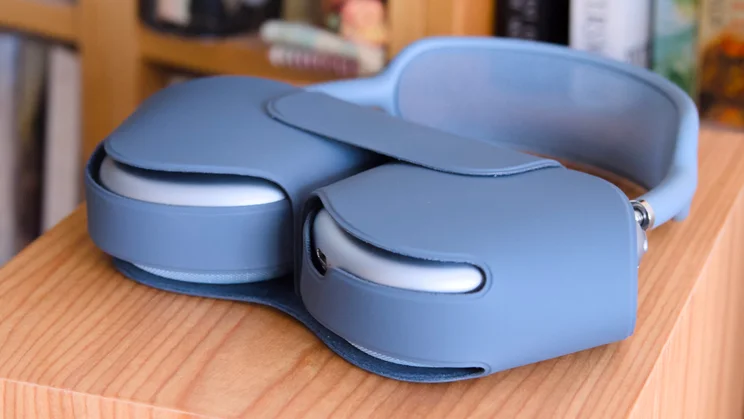
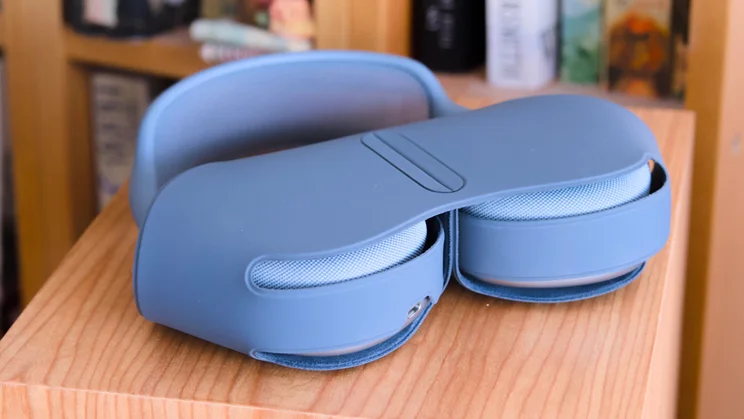
On a similar note, the case that comes with the AirPods is another continuing disappointment. It provides the headphones with very little protection; the fragile mesh on the headband is left exposed, and it’s not as if you can do away with the case, either. If you leave the headphones out of the case, they will never fully power down, and the next time you pick them up, they’ll probably be dead or, at the very best, very low on battery.
Which brings me to my final point of contention with the Apple AirPods Max 2: battery life, which at 20 hours with ANC enabled, falls well short of the standard set by rivals. The Sony WH-1000XM6 last 30 hours with noise cancelling enabled, as do the Bose QuietComfort Ultra (2nd gen), the Bowers & Wilkins Px8 S2 and the Sonos Ace. And as I highlighted just above, they last even less time if you forget to pop them back in the case. That’s a B-minus for battery life, Apple; you could (and should) be doing better.
Should you buy a pair of Apple AirPods Max 2?
Objectively, the Apple AirPods Max 2 are impressive headphones. They sound great, particularly with spatial audio sources, active noise cancellation is superb, and they look and feel special in a way that most others cannot match.
However, there are quite a few areas in which they’re found lacking: the fit is just too loose for those with smaller heads, the headphones are a tad too heavy to be truly comfortable for long periods, battery life is below average, and the price, despite coming down in real terms over the years, is still too high.
If you choose to disregard these issues, though, I guarantee you’ll enjoy how they sound and cancel out ambient noise. But when you can get a pair of headphones that are more comfortable, sound just as good and cancel noise more effectively for £150 less, why would you choose to pay the premium?


